After Saint Basil's Cathedral was achieved in the mid-sixteenth century, a legend all started to circulate in regards to the eclectic Orthodox church observed in the coronary heart of Moscow.
It turned into an architectural feat — the tallest structure within the city, thanks to new brickwork advantage from the Italians — and it become a display of Russia's might at the end of a century-lengthy conflict.
in line with whispers, the Grand Prince of Moscow, infamously nicknamed Ivan the terrible, had its architects blinded, so that they could by no means once more design a constructing so majestic.
Yet the origins of the constitution remain in most cases shrouded in mystery.very nearly five centuries on, the architects' identities cannot be tested, notwithstanding it's often believed that the design may still be credited to two architects, named Barma and Postnik Yakovlev. Some historians say that the two names in reality reference a single grownup and that "Barma" turned into in fact Postnik Yakovlev's nickname.
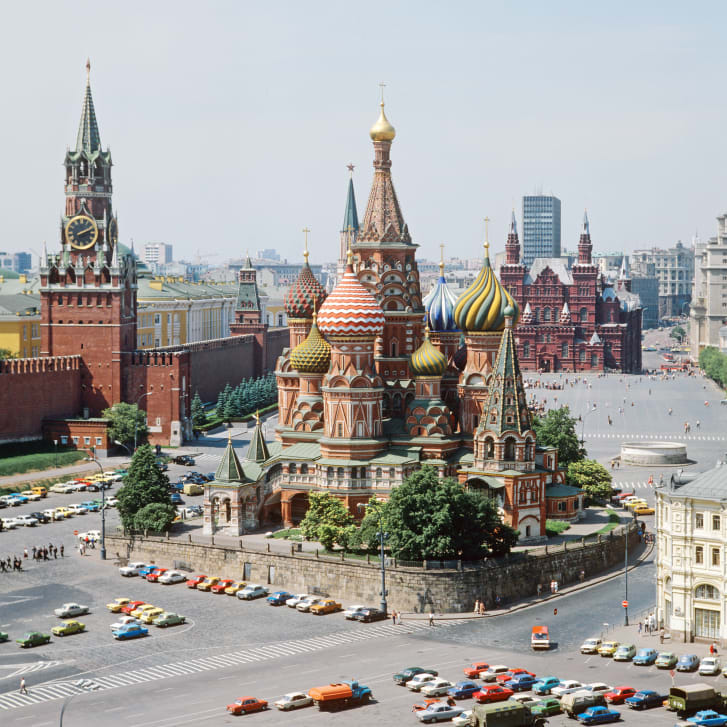 S aint Basil's Cathedral sits in Moscow's red rectangular close the fortfied Kremlin complicated. credit: Valentin Sobolev/Alexander Chumichyov/TASS/Getty pictures
"It's in fact extraordinary how some of the most basic facts don't seem to be in fact verifiable," stated William Brumfield, a historian of Russian structure and author of the recent book "Journeys during the Russian Empire," over a video convention name.Documentation is scarce, leaving historians like Brumfield to hunt for clues."We come across this problem repeatedly in the heritage of Russian architecture, whilst late as the 18th century. there were many fires, invasions, cataclysms. Moscow burned in 1812 during the Napoleonic invasion. The documents are sometimes just no longer there," defined Brumfield.
these days, Saint Basil's, officially referred to as Pokrovsky Cathedral, stands as a sequence of pink brick chapels encircling the greatest, crucial form.
each and every chapel is topped with a vibrantly coloured dome of blues, veggies, reds and yellows. The cathedral is generic worldwide for its fairytale-like look, and attracts around four hundred,000 visitors a 12 months and has develop into a vital cultural symbol.
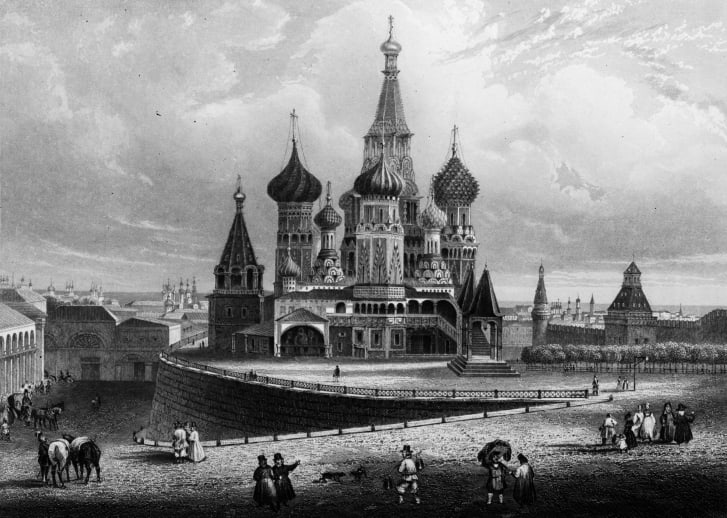 An engraving of Saint Basil's circa 1700. The cathedral changed into just about blown up by way of Napoleon Bonaparte in 1812 and was well-nigh demolished by way of Joseph Stalin in 1935. credit: Hulton Archive/Getty pictures
The masterpiece, discovered in the metropolis's purple rectangular, has passed through large alterations, expansions and restorations over the centuries, and has even modified color. initially referred to as Trinity Cathedral, the constructing burned down in 1583 and become rebuilt over the subsequent decade.
Historians aren't bound precisely how the cathedral looked before the fire, but in line with written descriptions at the time and a seventeenth-century engraving, they do know the famed onion domes — flared cupolas that became emblematic of Russian Orthodox architecture — had been introduced after.
Saint Basil's has also seen ratings of battle and political adjustments: It weathered a different destructive fireplace in 1737; it changed into very nearly blown up via French defense force general Napoleon Bonaparte in 1812 and it confronted the chance of demolition below Communist chief Joseph Stalin's reign.
A display of power
what is typical concerning the constitution is that in 1555, Ivan IV ordered the building of the church as a reveal of armed forces might, to honor Russia's conquer the Kazan Khanate within the century-lengthy Russo-Kazan Wars."(The cathedral) had a very clear political which means," mentioned Brumfield.
"It confirmed the vigour of Ivan the awful as a Grand Prince — he would be later customary because the first tsar."
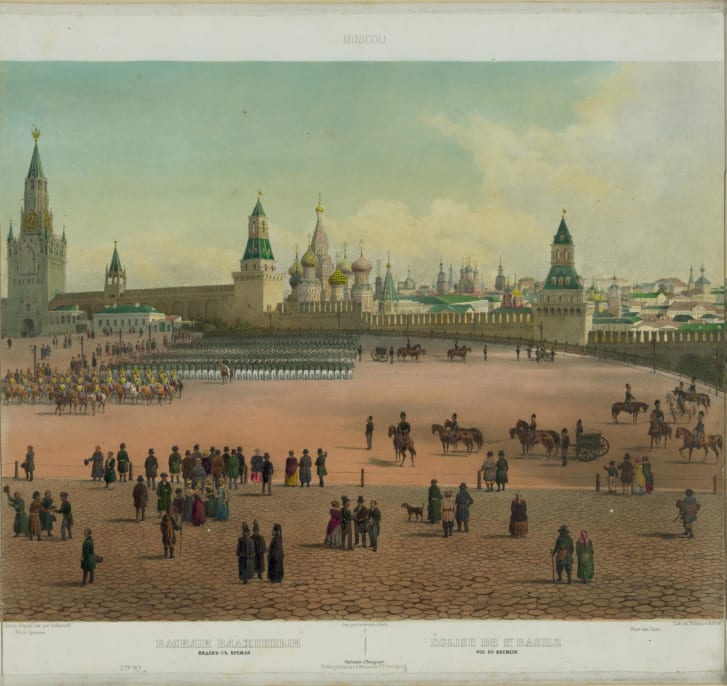 "Russia turned into in fact terra incognita," observed Russian architecure historian William Brumfield. "So little become everyday about it and a lot of of the studies that came out of (Russia) all the way through the 16th century were fanciful. They have been written by means of overseas mercenaries who were in Ivan (IV)'s provider." credit score: best art photographs/Heritage pictures/Getty photos
Saint Basil's wouldn't take its nickname unless the guideline of Ivan's son, Fyodor, who built a chapel committed to Saint Vasily — or Basil — the Blessed, a Holy fool who changed into commonly used to Ivan and changed into observed to have powers of prophecy, including predicting the exquisite fireplace that raged through Moscow in 1547 and Fyodor's own eventual reign. The chapel for Saint Basil — the remaining to be erected — became built in his reminiscence and sits atop the vault that homes his is still. It grew to become probably the mos t popular chapel, the place friends who sought curative would come to pray.
The church's architects actually tapped the architectural prowess of the Italians, who were popular for their sturdy brickwork and hovering heights, as demonstrated in buildings just like the iconic pink-brick dome of the Florence Cathedral. Between 1475 and 1510, Italian architects rebuilt the Kremlin as well as two critical church buildings, bringing their new imaginitive Renaissance techniques to Russia.
Their knowledge protected the know-how to make steep tented roofs, which Saint Basil's has on its central chapel.
The architects at the back of Saint Basil's organized the group of chapels in a on the whole symmetrical design, with each and every one housing an altar dedicated to a saint associated with Ivan's power.
"They (Russian architects) took Italian know-how and realized to build these tall vertical structures and give … political value (and) dynastic importance" to cathedrals, mentioned Brumfield.
colorful cupolas
notwithstanding the onion dome grew to be characteristic of Russian structure, nobody is fairly sure how they entered the Tsardom, in line with Brumfeld. It's possible Saint Basil's was the first in the place to undertake them.
"At some aspect, the concept just swept through Russia," he spoke of. "monks have been changing domes in every single place Russia with the onion dome."
they have remained typical in the course of the centuries, from the twin 18th-century wood church buildings on Kizhi Island; to the 19th-century St. Petersburg landmark, The Church of the Savior on Spilled Blood; to the modern Transfiguration Church built in 2008 in superstar metropolis.
Theories, based on Brumfield, indicate St. Basil's architects appropriated the cupola sorts of the Ottoman Empire, symbolizing victory over the Kazan kingdom, which turned into a Tatar Turkic state. Or they might have referenced the dome of the The Church of the Holy Sepulchre in Jerusalem.
 The Church of the Transfiguration in Kizhi, Russia, is a wooden cathedral topped with many onion domes. credit: Shutterstock
"The Russians all the way through this length have been starting to see their terrain as the new sacred land," Brumfield defined.
at the time, Jerusalem turned into beneath the rule of the Ottomans, as become the former Roman capital city Constantinople (now Istanbul), and neither identified papal authority. They believed that left the door open for a new city to develop into the holy capital.
The hues, too, should not have a decisive backstory. They have been introduced over time, from the late 17th century to mid-19th century, as new traits appreciated vivid colours.
"Russians love colourful decorations," Brumfield referred to, including that the colour scheme also offers it vibrancy against overcast skies, of which there are lots of throughout the nation's long, darkish winters.
Saint Basil's isn't the most effective cathedral painted in wonderful colorings. they are dotted throughout the country, including the festive, gold-accented Stroganov Church in Nizhny Novgorod and the brilliant pink, blue-topped Church of Our lady of Kazan in Irkutsk.
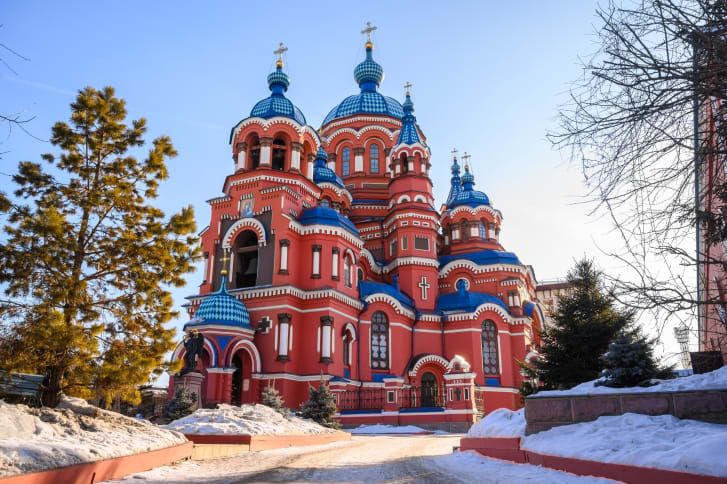 Our lady of Kazan Church in Irkutsk, Russia, is vibrant pink, like Saint Basil's, and stands out with vivid blue domes. credit: Shutterstock
Saint Basil's colour changed as the rest of it did too, with a new bell tower introduced to its exterior and floral decorations and figurative murals brought to its interior.
"It is sort of a dwelling organism. It has grown; it has changed; it has been modified," stated Brumfield. "but the core has all the time been multiple. It's remained there as a symbol of Muscovy and Russia's persistence."
actually, its transformative nature is perhaps why it has continued. "The fact that it turned into so assorted meant that each century views it as its own. it's truly loved. There is no other building in Russia that draws such devotion and love as Saint Basil's."


No comments:
Post a Comment