A Nanai hunter (L); an ancient stone carving displaying a substantial
Boris Ushmaikin/Sputnik; Andshel (CC through-SA three.0)A small Nanai village in the Russian far East is domestic to probably the most country's oldest archaeological websites. The area is also noted for mystical occurrences and other legends.
With its gracious, wide and tree-lined boulevards, well maintained flip of the nineteenth to twentieth century constructions and a energetic riverfront, the city of Khabarovsk is regularly called the most European metropolis in Asia. Nothing in the tranquil metropolis suggestions of a heritage that goes beyond the middle of the 19th century, however a brief street travel along the Amur River is adequate to unfurl a treasure trove of petroglyphs (prehistoric rock carvings) which are believed thus far returned to 12,000 BC.

Khabarovsk's metropolis middle
Legion MediaThe Khabarovsk Krai, which has about 789,000 square kilometers of territory, is among the most sparsely populated places on the planet. These massive swathes of vacancy are visible when one drives on the toll road that connects Khabarovsk with the industrial metropolis of Komsomolsk-on-Amur.
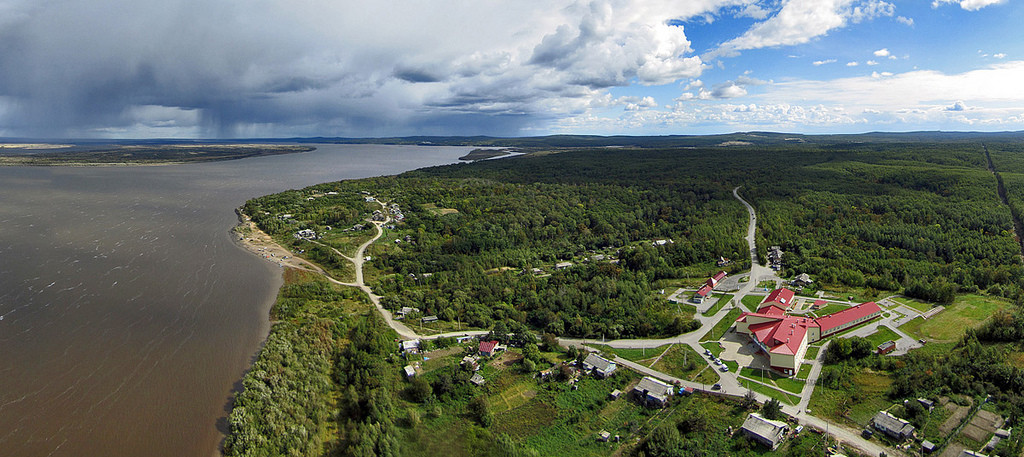
The Nanai village of Sikachi-Alyan on the Amur River
Mikhail Mury (CC with the aid of-SA 2.0)75 kilometers north of Khabarovsk and just off the highway and on the right financial institution of the Amur is the Nanai village of Sikachi-Alyan, the place the petroglyphs can be found. Residents name the village the 'home of irritated spirits', due to the mystical occurrences that many have claimed to witness there.
historical past on the rocksThe enviornment has about 200 petroglyphs, with a significant quantity being well preserved. The petroglyphs are with ease obtainable, as they're near the water's facet on basalt boulders.
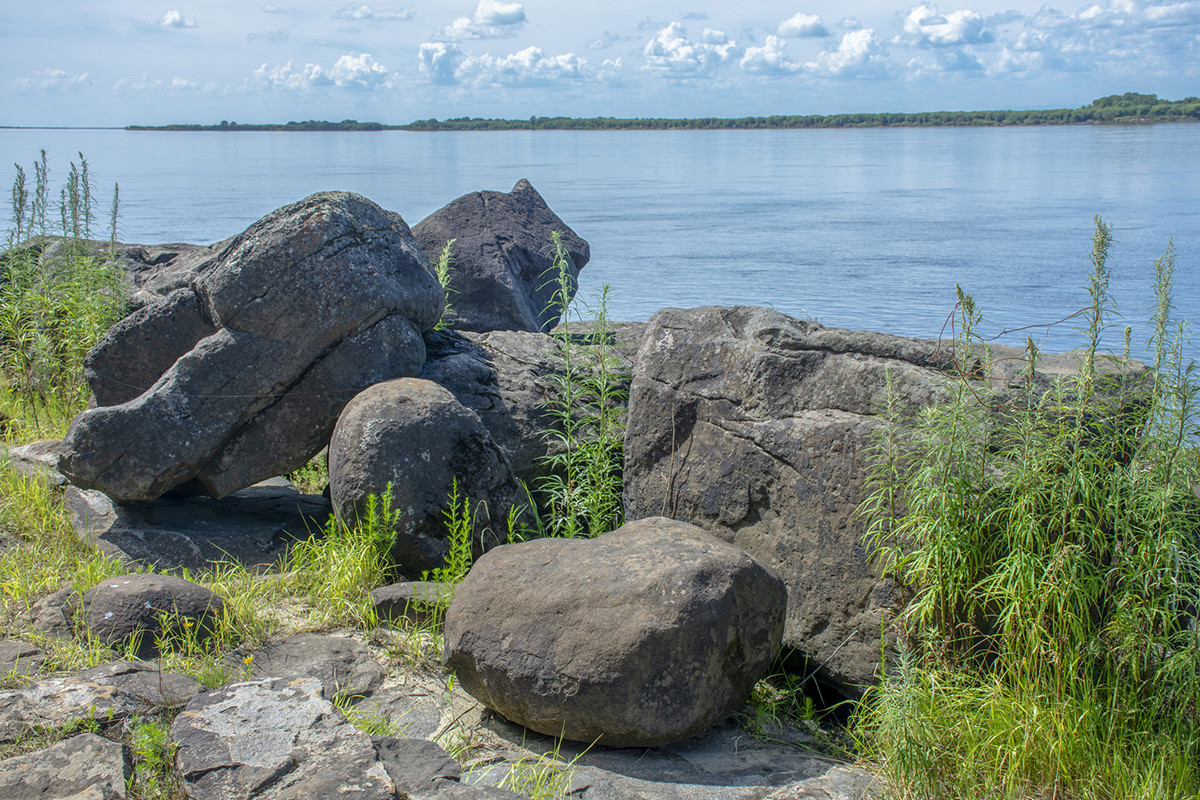
Petroglyphs of Sikachi-Alyan
Legion MediaThe most efficient time to visit the area is in fact early or late winter (despite the brutal cold), when you consider that the overflowing waters of the Amur conceal them within the hotter months. Floods and ice floes have additionally caused appreciable damage to lots of the petroglyphs. Locals say one of the most boulders were became upside down.
The carvings that date from different periods depict searching scenes, animals, corresponding to elk, horses and mammoths, shamans and shamanic masks and even americans sitting in boats.

Legion Media
Russia's a long way East is believed to were one of the last habitats of mammoths before they grew to be extinct. among the most effective-preserved petroglyphs of Sikachi-Alyan, there is one engraving that obviously depicts a great, whereas an extra shows a monstrous with an unknown creature. There's additionally a large depiction of a beast with a tail.
Svetlana Onenko, a native historian who's additionally the curator of the indigenous people's ethnographic museum and cultural center in Sikachi-Alyan, says the very existence of the significant depictions proves that the petroglyphs date back to round 12,000 BC. She adds that the historic dwellers of this enviornment probably also hunted mammoths.
The older photographs, dating to the Paleolithicage, had been carved out the use of stone tools. it would be referred to that some archaeologists argue that the wild horses depicted in one of the most petroglyphs did not exist in the Amur place even in the Neolithic age.

Legion Media
The more moderen carvings, together with those of shamans and shamanic masks were used with extra modern tools. These pictures are sacred to the Nanai and different indigenous corporations who are living in the village with a complete population of just 300. Onenko says the contributors of the indigenous community are descended from the americans who carved out the petroglyphs. Some European anthropologists, besides the fact that children, agree with that the indigenous americans have been more fresh settlers, who moved to the enviornment round 2,000 years ago from Manchuria.
An home of ShamanismNeo-Shamanists consult with the enviornment from diverse parts of the world and take half in rituals, which some suspect as being influenced by using a cult. Such is the belief in Shamanism in this area that the museum, which has a large number of indigenous artefacts, crafts and historical chinese language cash, continues its Shamanic objects in a designated house it's ritually blessed. "Shamanic objects are believed to possess a powerful (and probably dangerous) power," Onenko says.
Locals claim to identify mystic occurrences near the so-known as Starukha (Eng.: "historic girl") rock formation. in line with indigenous legends, human beings did not die at one point of time, however their inhabitants grew so giant that there wasn't satisfactory food for each person. So the earth's spirits decided that people, like animals, would even have to die.
The Starukha was interestingly the primary human being to face loss of life and ended up changing into that big (and interestingly haunted) rock.
First Russian vacationerwhile the Nanai and other indigenous corporations had been privy to the existence of the petroglyphs for centuries, the backyard world got here to understand of them most effective in 1859, a year after the foundation of the metropolis of Khabarovsk.
This "discovery" became made through Richard Maack, a geographer, naturalist and explorer who set out on an expedition of the Amur and Ussuri valleys. Maack, who turned into born in the Russian Empire's Baltic governorate of Livonia, studied herbal sciences on the college of St. Petersburg and undertook several expeditions to Siberia and the Russian far East in the 1850s.
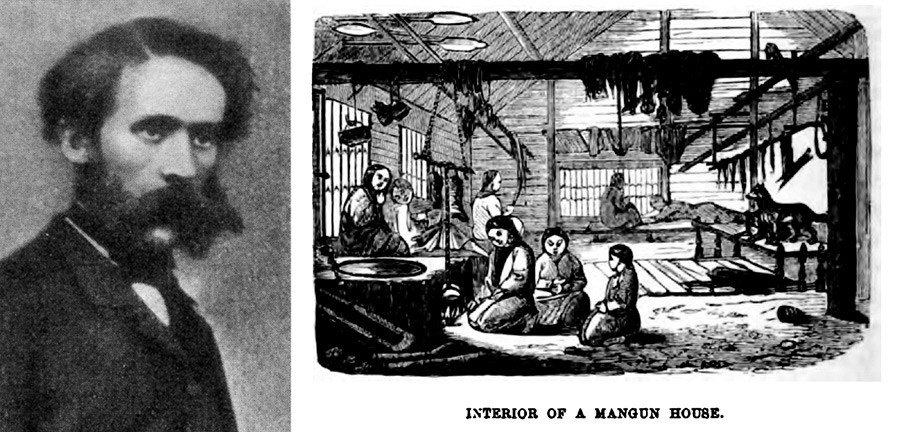
A portrait of Richard Maack (L); and his drawing of an indigenous individuals's house
Public domainMaack's main enviornment of pastime turned into botany and six in the past unknown vegetation that he gathered by way of the Amur have been named after him. His expedition north of the newly-founded Khabarovsk led him to Sikachi-Alyan, where he noticed the petroglyphs. There are less than a handful of surviving copies of Maack's e-book titled, 'commute on the Amur river made with the aid of order of the Siberian department of the Emperor's Russian Geographical Society in 1855', which carries a wealth of suggestions.
Russian archaeologists, scientists and historians took a fine activity in the petroglyphs in the 20th century. in the Nineteen Thirties, archaeologist Nikolai Kharlamov photographed them in detail. Three a long time later, ethnographer and historian Alexei Okladnikov went on a few expeditions to the area and wrote about the petroglyphs in aspect in two books. His findings suggest that the artwork of Sikachi-Alyan had some resemblance to its counterparts from South East Asia, Polynesia and Australia.
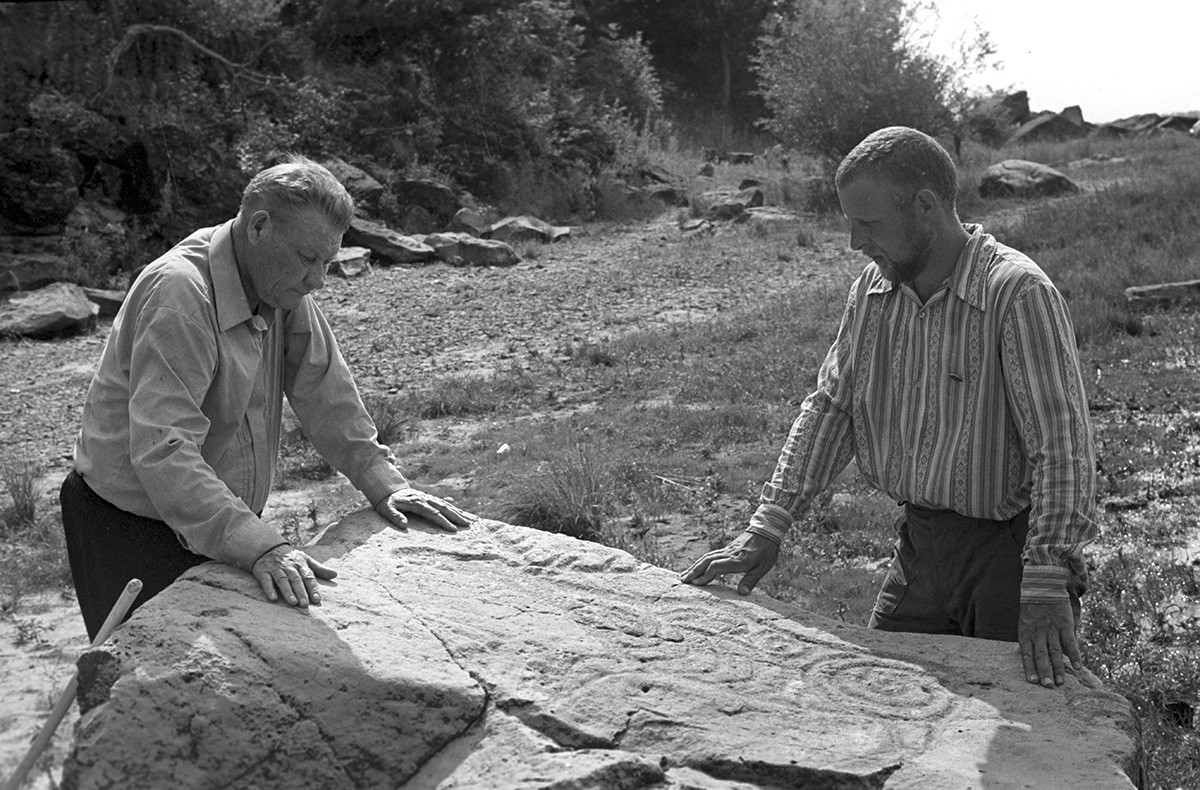
Alexei Okladnikov (L) inspects the petroglyphs
Dvernick/SputnikThe petroglyphs of Sikachi-Alyan at the moment are among the many most visited websites in Khabarovsk Krai. The Russian federal executive was declared the criminal owner of the petroglyphs in 2018 and efforts are underway to superior retain them, as smartly get the rock formations listed with the aid of UNESCO as a world Heritage web site.
If the usage of any of Russia beyond's content, partly or in full, at all times supply an active hyperlink to the common fabric.


No comments:
Post a Comment